Boracay · February 12, 2026
Boracay, planned as a small island rather than a slogan
How Boracay is actually laid out: White Beach stations, the boat arrival, and the trips that deserve a second day.
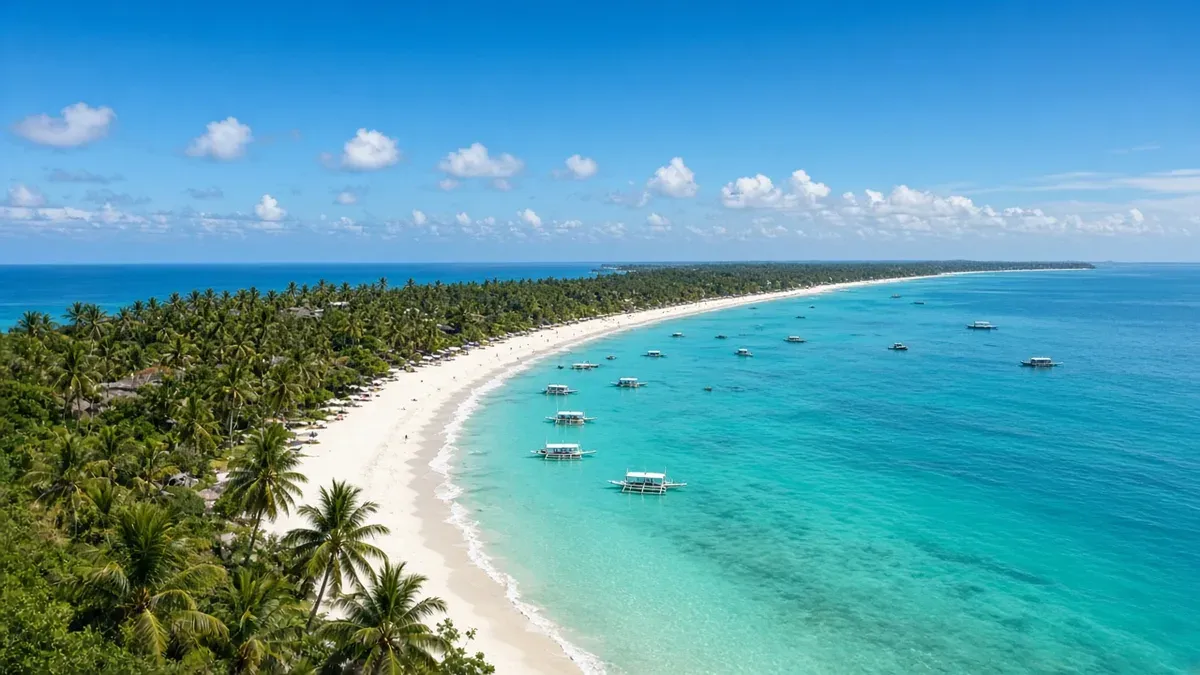 Boracay
Boracay is about 7 kilometres of island off Malay, Aklan. The famous strip is White Beach on the west coast. East-facing Bulabog faces the prevailing wind and is where kiteboarders gather in the amihab season. Puka and Ilig-Iligan sit at the quieter north end, past Diniwid.
Treat the island as three walks, not one resort campus. Station 1 runs from Diniwid toward the old boat landing and stays the calmest after dinner. Station 2 carries the densest restaurants and the loudest night bars. Station 3 lengthens toward Angol, the wet market, and the path most locals use for groceries. The station comparison is the page to read before you pick a hotel pin.
Arrival is a sequence: plane, tricycle or van to the jetty, boat to Cagban or Tambisaan, then a registered land transfer because private walk-on vehicles are tightly controlled. Build 90 minutes after wheels-down at Caticlan before you promise anyone a sunset table.
A useful four-night split is two beach days, one boat day, and one weather spare. Island hopping toward Crystal Cove or Crocodile Island needs a morning start. Afternoon trips collide with wind and with the boats already committed to airport runs.
White Beach sand is fine and the water is clearest on calm mornings before the banana boats queue. If the west swell is up, swimming flags matter more than the photo you saved in January. Confirm fee notices at the jetty rather than trusting a screenshot from last summer.