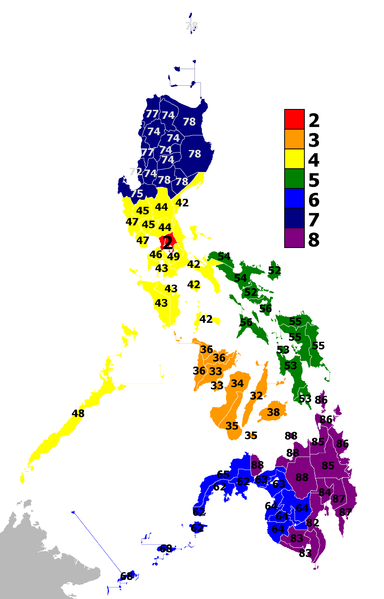
Get to know everything about Cebu zip codes, area codes, and how to use them. Find detailed information on Cebu’s postal codes, and learn how to make sure your mail reaches its destination
In this post, we’ll also go through how to contact a landline in Cebu. We’ll also give you some hints on how to ensure proper dialing and the correct prefixes and Cebu Area Code to use.
The Importance of Knowing ZIP Codes and Area Codes in Cebu
Living or doing business in Cebu, Philippines can be quite challenging especially if you’re new to the area. Knowing the right ZIP codes and area codes is essential for a better experience. ZIP codes are important in identifying areas or locations that help ensure delivered packages arrive at their destination on time.
On the other hand, area codes allow communication with people located anywhere within Cebu and the Philippines. ZIP codes are essentially a system of postal codes used by postal services around the world to facilitate efficient mail delivery.
A ZIP code typically contains four digits that correspond to a specific location or area within a city, town, or municipality. This code is used by mail carriers to sort mail for delivery to specific addresses.
Meanwhile, an area code is a numerical prefix assigned by telecommunications companies to each geographic region in the country. It helps identify where calls come from and where they are going.
The importance of knowing these codes cannot be overstated especially if you’re sending packages across different cities and municipalities within Cebu or simply making phone calls outside your immediate location. These codes help shorten mailing times while also ensuring smooth communication with family members, friends, or business associates who may live far away from you.
If you’re unsure about these codes when sending packages or making phone calls within Cebu or even outside of it, it’s essential that you take note of them before proceeding with your transaction.
In the next sections of this article, we’ll provide an overview of both ZIP codes and area codes in Cebu as well as how they work so that you can easily understand how these systems function when mailing items and communicating via phone call – whether for personal matters or business purposes.
Getting to Know Cebu ZIP Codes
ZIP codes are essential to the postal system in the Philippines, and Cebu is no exception. A ZIP code is a series of numbers assigned by the Philippine Postal Corporation (PhilPost) to specific areas in the country.
The code is used to identify and sort mail, making it easier for post offices to process them efficiently. In Cebu, ZIP codes play a crucial role in sending and receiving letters or packages.
Without them, your mail may end up delayed or worse, lost! Knowing how ZIP codes work is essential for anyone living in Cebu who wants to send or receive mail without any problems.
Understanding Cebu zip codes is essential for a number of reasons. In addition to being used to designate regions in Cebu, it facilitates postal delivery, online shopping, and other activities. Zip codes can be used to find out about the local area, population data, and additional valuable information. This article will provide the different zip codes in Cebu.
The Complete List of CEBU Zip Codes & Telephone Area Codes
WHAT ARE ZIP CODES IN THE PHILIPPINES
The Philippine Postal Corporation (PhlPost) uses a ZIP code in the Philippines to streamline mail delivery. Four digits are used to represent a locale in a ZIP code. For places in Metro Manila, more than one code is typically assigned, and for each municipality and city in provincial areas, only one code is issued.
WHAT IS THE PHONE COUNTRY CODE OF THE PHILIPPINES
You can call the Philippines internationally from another country using the country code +63.
WHAT ARE AREA CODES IN THE PHILIPPINES
There are unique area codes assigned to different areas in the Philippines.
Note: In this article, the character X inside the bracket () represents the area code, and the succeeding characters represent the unique phone number of the telephone line.
HOW TO CALL THE PHILIPPINES FROM ABROAD
Callers from abroad should dial Philippine phone numbers as +63 (XXX) YYY ZZZZ.
HOW TO DIAL DOMESTIC CALLS IN THE PHILIPPINES
For domestic calls, the trunk prefix (0) is used instead of the country code (+63).
HOW TO MAKE LOCAL CALLS
The area code and the zero are dropped for local calls. For local landline dial as 0 YYY ZZZZ.
HOW TO MAKE MOBILE CALLS IN THE PHILIPPINES
The format for mobile numbers is +63 WWW YYY ZZZZ or 0 WWW YYY ZZZZ.
HOW TO CALL A CEBU LANDLINE
International +63(32) YYY ZZZZ
Domestic 0(32) YYY ZZZ
Local YYY ZZZ
Conclusion
Understanding Cebu’s zip codes and area codes is crucial to ensure your mail and packages reach their intended destination without delay. With this comprehensive guide, you now have the necessary information to properly use these codes and avoid any unnecessary complications or frustrations. By following the guidelines outlined in this post, you can confidently send mail and packages to Cebu and have peace of mind that they will arrive safely and on time.
Cebu is the “hidden paradise” of the Philippines. The city of Cebu and its surrounding areas offer a wide range of vacation options, from water-based activities like diving and snorkeling to hiking, world-class shopping, and sightseeing at historic and cultural attractions. With its amazing natural beauty, easy accessibility, and high customer satisfaction, Cebu is the best place to visit in the Philippines. Find out more in this quick guide to Cebu.
Introduction Cebu Ocean Park offers more than just aquatic animals. This captivating facility exceeded our expectations and proved to be a must-visit destination for families with children. Discovering More Than Aquatic Animals Contrary to its name, Cebu Ocean Park showcases not only marine life but also species from the air and land. We were pleasantly…
Discover the best places to visit in the Philippines this July, from vibrant Manila to stunning Boracay and off-the-beaten-path gems. Unforgettable adventures await!
Embark on a flavorful journey through Philippine cuisine, savoring local delicacies from Luzon to Mindanao. Indulge in street food wonders and sweet treats!
Discover the exquisite paradise of Boracay Island through our detailed travel tips. From stunning beaches to thrilling water activities, plan your ultimate getaway now!
Uncover the delightful world of Starbucks in the Philippines with our detailed guide. Find a Starbucks near you and indulge in unique flavors and experiences!
Embark on an unforgettable adventure through the Philippines with our comprehensive backpacker’s guide. Discover hidden gems, stunning islands, and practical travel tips. Start your journey now!
Introduction The Philippines, an archipelago of 7,641 stunning islands nestled in Southeast Asia, is a haven for travelers seeking diverse landscapes, vibrant cities, and warm hospitality. With its pristine beaches, lush mountains, and rich cultural heritage, the Philippines offers a unique experience that captivates the senses and leaves an indelible mark on those fortunate enough…
Discover the enchanting Philippines during Christmas with this detailed travel guide. Immerse in local traditions, explore festive destinations and make unforgettable memories.
The Philippines, an archipelago of 7,641 stunning islands nestled in Southeast Asia, is a haven for travelers seeking diverse landscapes, vibrant cities, and warm hospitality. With its pristine beaches, lush mountains, and rich cultural heritage, the Philippines offers a unique experience that captivates the senses and leaves an indelible mark on those fortunate enough to explore its wonders.
Brief Overview of the Philippines as a Travel Destination
From the bustling capital city of Manila to the idyllic shores of Palawan and Boracay, the Philippines boasts an array of destinations that cater to various interests. Nature enthusiasts can immerse themselves in breathtaking natural wonders like the UNESCO World Heritage-listed Tubbataha Reefs Natural Park or trek through the stunning Chocolate Hills in Bohol.
Adventure-seekers can indulge in adrenaline-pumping activities such as diving with whale sharks in Donsol or surfing legendary waves along Siargao’s coastline. Moreover, for history buffs and cultural enthusiasts alike, there are numerous historical sites and museums showcasing the country’s rich past.
The ancient rice terraces of Banaue give glimpses into pre-colonial engineering marvels while Intramuros—the walled city within Manila—recounts Spanish colonial rule. The country’s geographical diversity also translates into a varied climate across its regions.
The cool highlands of Baguio offer respite from tropical heat while Batanes’ rugged landscapes are whipped by strong winds year-round. Travelers should plan their itineraries accordingly to make the most out of this tropical paradise.
Importance of Understanding Filipino Culture for Travelers
While exploring any new destination is exciting, understanding and appreciating the local culture adds depth and enriches one’s travel experience. The same holds true for the Philippines, where diving into its vibrant culture is essential for travelers to fully embrace their journey. Filipino culture is deeply rooted in the values of respect, family ties, and faith.
From the tradition of “Bayanihan” (community unity) to the emphasis on close family bonds, visitors who comprehend these values will find themselves welcomed with open arms and feel a sense of belonging. Moreover, understanding Filipino customs and traditions helps avoid cultural misunderstandings that may inadvertently occur during interactions.
Familiarizing oneself with non-verbal communication cues—such as the “mano po” gesture (blessing by touching an elder’s hand to one’s forehead)—is crucial in showing respect to elders. Being aware of appropriate dress codes when visiting religious sites or attending formal events also demonstrates cultural sensitivity.
By immersing themselves in Filipino culture, travelers can engage more meaningfully with locals and develop a deeper appreciation for the country’s history and traditions. Additionally, it allows individuals to support local artisans, musicians, and performers by actively seeking out opportunities to experience traditional arts, crafts, music, and dance firsthand.
Geography and History
Archipelago of 7,641 islands and its impact on culture
The Philippines, located in Southeast Asia, is a breathtaking archipelago consisting of 7,641 islands. This geographical feature has played a significant role in shaping Filipino culture. The islands offer diverse landscapes, from stunning beaches and coral reefs to lush mountains and rice terraces.
This varied topography has contributed to the development of unique regional cultures within the country. The coastal areas are characterized by vibrant fishing communities, where seafood is an integral part of the local cuisine.
In contrast, the mountainous regions have fostered indigenous tribes that maintain their ancestral traditions and practices. The archipelagic nature also influences transportation, with boats being a common mode of travel between islands.
Furthermore, the Philippines’ position along major trade routes has made it a melting pot of cultural influences from neighboring countries such as China, Malaysia, Indonesia, and even India. These external influences have blended with indigenous customs to shape Filipino identity.
Influence of Spanish colonization and American occupation
Spanish colonization had a profound impact on Filipino culture that can still be seen today. The Spanish arrived in the 16th century and ruled for more than three centuries until 1898.
During this period, Catholicism became deeply ingrained in the lives of Filipinos as it was imposed as the state religion. Many architectural marvels like churches were constructed across the country showcasing exquisite Spanish colonial design.
Spanish influence is also evident in Filipino surnames (e.g., Garcia) and common names (e.g., Maria). Moreover, many Spanish loanwords are integrated into Philippine languages such as Tagalog.
The introduction of Western education during this time influenced literature and arts. In contrast to Spanish colonization, American occupation occurred after Spain ceded control following the Spanish-American War in 1898 until 1946.
The American influence brought about significant changes in education, government, and cultural practices. English became widely spoken and the medium of instruction in schools.
The American-style system of governance remains a notable legacy, evident in the country’s political structure. American cultural influences are also seen in popular entertainment such as films, music, and sports.
Basketball, introduced by the Americans, has become a national obsession in the Philippines. Moreover, fast-food chains like McDonald’s have gained immense popularity across the country.
The archipelagic nature of the Philippines has shaped its culture into a tapestry of regional diversity. Spanish colonization left an indelible mark on Filipino culture through religion, language, and architecture.
Meanwhile, the American occupation brought English language proficiency and influenced various aspects of modern Philippine society. Understanding these aspects is crucial for travelers to fully appreciate and engage with Filipino culture during their visit to this fascinating country.
Language and Communication
Official languages: Filipino (Tagalog) and English
The Philippines is a linguistically diverse country, but the official languages are Filipino (based on Tagalog) and English. Filipino is the national language, while English serves as the second official language.
This linguistic diversity stems from a history influenced by Spanish colonization and American occupation. While you will find that most Filipinos can communicate in English to some degree, especially in urban areas, it’s always appreciated when travelers make an effort to learn basic Filipino phrases.
Common phrases and greetings in Filipino
When immersing yourself in the vibrant culture of the Philippines, learning a few common phrases and greetings in Filipino can go a long way in connecting with locals. Here are some essential expressions:
1. “Kumusta ka?” – This is equivalent to asking ‘How are you?’ It’s a friendly way to initiate conversation.
2. “Salamat” – Meaning ‘Thank you.’ Use this expression to show appreciation for someone’s help or kindness.
3. “Magandang umaga/tanghali/hapon/gabi” – These phrases translate to ‘Good morning/noon/afternoon/evening,’ depending on the time of day.
4. “Paalam” – When saying goodbye, use this word which means ‘Goodbye’ or ‘Farewell.’
5. “Oo/Hindi” – These words mean ‘Yes’ and ‘No,’ respectively—useful for simple responses.
By using these basic phrases, you demonstrate respect for the local culture and make meaningful connections with the people you encounter during your travels.
Importance of non-verbal communication, such as gestures and facial expressions
In addition to verbal communication, non-verbal cues play a significant role in Filipino culture. Understanding these gestures and facial expressions will enhance your interactions and help you navigate social situations effectively.
1. SMILE: Filipinos are known for their warm smiles, which can signify friendliness, gratitude, or happiness. A smile is often used as a way to establish rapport and convey positive intentions.
2. MANO: The “mano” is a traditional Filipino gesture of respect. It involves taking an elder’s hand and gently touching it to one’s forehead as a sign of respect and receiving blessings.
3. POINTING WITH LIPS: Instead of pointing with their fingers, Filipinos sometimes use subtle lip movements or a slight tilt of the head to direct attention towards something or someone.
4. TOUCH AND PHYSICAL CONTACT: Filipinos are generally comfortable with physical contact when conversing, such as light touches on the arm or shoulder. However, it’s crucial to be mindful of personal boundaries and respect individual preferences.
5. EYE CONTACT: Maintaining eye contact during conversations is considered polite in Filipino culture as it shows attentiveness and engagement. However, excessive eye contact may be seen as confrontational or overly assertive.
By being aware of these non-verbal communication cues, you can effectively connect with locals, display cultural sensitivity, and foster meaningful connections during your journey through the Philippines.
Language plays an essential role in understanding Filipino culture when traveling in the Philippines. While English is widely spoken, making an effort to learn basic Filipino phrases will go a long way in building connections with locals and showing respect for their language heritage.
Additionally, being attentive to non-verbal communication cues such as gestures and facial expressions will further enhance your cultural experience by allowing you to understand the subtleties underlying verbal interactions. By embracing both verbal and non-verbal forms of communication, you will undoubtedly create memorable connections throughout your exploration of Filipino culture.
Festivals and Celebrations
Immerse in the Vibrant Tapestry of Filipino Festivals
When it comes to festivals and celebrations, the Philippines is a true standout. With its rich cultural heritage and diverse traditions, the archipelago offers a myriad of vibrant and colorful festivals that captivate both locals and travelers alike. These festivals serve as windows into the heart and soul of Filipino culture, showcasing age-old customs, religious devotion, and artistic expressions.
An Overview of Major Festivals
Among the plethora of festivities in the Philippines, three major festivals stand out: Sinulog in Cebu, Ati-Atihan in Aklan, and Pahiyas in Quezon. Sinulog is held every third Sunday of January to honor the Santo Niño (Child Jesus).
It features a grand street parade filled with revelers donning vibrant costumes while dancing to rhythmic drum beats. Ati-Atihan Festival takes place in January as well, celebrating local pre-Hispanic traditions.
Participants paint their faces with black soot to emulate indigenous tribespeople while engaging in lively street processions. Pahiyas Festival is a unique harvest celebration held on May 15th annually.
Houses are adorned with colorful decorations made from rice grains, fruits, vegetables, and other agricultural products. The festival serves as an expression of gratitude for bountiful harvests while showcasing exquisite creativity within local communities.
Experience Cultural Extravaganza through Unique Practices
What makes these festivals truly spectacular are the unique cultural practices associated with them. Street dancing takes center stage during Sinulog and Ati-Atihan festivals. Dancers clad in elaborate costumes sway gracefully to traditional music as they fill the streets with energy and rhythm.
The synchronized movements symbolize unity among participants while paying homage to their ancestral roots. Colorful parades are another highlight of these festivals.
Floats adorned with intricately designed decorations cruise through the streets, showcasing creativity and artistry. Participants throw sweets, confetti, and colorful flower petals to the cheering crowd, creating a joyful and lively atmosphere that envelops everyone in celebration.
A Cultural Kaleidoscope Worth Witnessing
Attending these festivals is not only a feast for the eyes but also an opportunity to immerse oneself in the vibrant tapestry of Filipino culture. The pulsating energy, rhythmic beats, and enthusiastic participants create an infectious enthusiasm that transcends language barriers.
It is an invitation to witness and appreciate the heartwarming spirit of unity, devotion, and artistic expression deeply embedded within Filipino traditions. As a traveler experiencing these festivals, you will not only be an observer but also a participant.
Don’t hesitate to join in the revelry by donning traditional attire or trying out some dance moves alongside locals. Engaging with the community allows for meaningful cultural exchanges that leave lasting memories and forge connections beyond geographical borders.
So if you plan your visit around these celebrated events – Sinulog in Cebu, Ati-Atihan in Aklan, or Pahiyas in Quezon – prepare yourself for an immersive cultural experience like no other. Be ready to be dazzled by the riot of colors, mesmerized by enchanting performances, and swept away by the contagious excitement that embodies Filipino festivals.
Cuisine
Introduction to Popular Filipino Dishes: A Gastronomic Delight
Prepare your taste buds for a culinary adventure as we delve into the enchanting world of Filipino cuisine. The flavors and aromas that characterize Filipino dishes are a vibrant reflection of the country’s rich cultural heritage.
With influences from Malay, Spanish, Chinese, and American cuisines, Filipino food is a delightful fusion that will leave any traveler longing for more. One cannot begin to explore Filipino cuisine without mentioning the iconic dish – adobo.
Considered the national dish of the Philippines, adobo showcases the perfect harmony of soy sauce, vinegar, garlic, and spices. This versatile dish can be made with various proteins such as chicken or pork, resulting in succulent morsels infused with tangy and savory flavors.
Another must-try delicacy is sinigang – a comforting soup known for its sour taste. Traditionally made with tamarind as the souring agent, this hearty soup is packed with vegetables like kangkong (water spinach), radish, and taro root.
The tender meat – whether it be pork or shrimp – adds depth to every spoonful. Sinigang’s vibrant flavors will transport you to cozy family gatherings around steaming bowls of goodness.
Regional Specialties: Unveiling Culinary Gems
The diverse regions of the Philippines boast unique culinary specialties that deserve special attention. Let us embark on a gastronomic journey across three prominent regions – Ilocos, Visayas, and Mindanao – each offering distinct flavors that celebrate local culture.
In the Ilocos region located in Northern Luzon, two dishes stand out among many others – empanada and bagnet. Empanada is a savory pastry filled with seasoned ground meat (typically beef) mixed with vegetables such as green papaya and mung bean sprouts.
The golden crust, made from rice flour, lends a satisfying crunch to every bite. Paired perfectly with vinegar or spicy garlic sauce, Ilocos empanadas are a delightful treat.
Bagnet, on the other hand, is a crispy and succulent pork belly dish that is truly irresistible. This beloved Ilocano delicacy is made by boiling the pork belly first and then deep-frying it to perfection.
The result? A heavenly combination of tender meat and crackling skin that will leave you craving for more.
Venturing into the Visayas region brings us face-to-face with one of its most celebrated culinary gems – Lechon de Cebu. This roasted pig delicacy hails from Cebu City and captures the hearts of many with its distinct flavor profile.
Marinated in a secret blend of spices including garlic, lemongrass, and bay leaves, the pig is slow-roasted over an open fire pit until it achieves an enticingly crisp skin while maintaining juicy tenderness inside. Seafood lovers will also be delighted by kinilaw – a traditional Visayan dish akin to ceviche.
Fresh fish or seafood such as tuna or shrimp is marinated in vinegar or calamansi (a local citrus fruit) juice along with onions, ginger, chilies, and various herbs. The result is a tangy explosion of flavors that perfectly complements the natural sweetness of the seafood.
In Mindanao – the southern part of the Philippines – prepare yourself for an intriguing encounter with satti and durian delicacies. Satti is a popular street food known for its unique combination – skewered beef or chicken served with spicy peanut sauce and rice cakes called puso.
The flavors are bold but harmonious; each bite tells a story about Mindanao’s vibrant culinary scene. For those feeling adventurous when it comes to dessert, indulge in durian delicacies that showcase the distinct taste of the “king of fruits.” Durian, infamous for its pungent aroma, can be enjoyed in various forms such as candies, ice cream, or even durian-filled pastries.
Embrace the boldness and let your taste buds explore this tropical delight. Filipino cuisine is a treasure trove of flavors that reflects the country’s multicultural influences.
From savory adobo to tangy sinigang and regional specialties like Ilocos empanada, Cebu lechon, satti from Mindanao, and durian delicacies – every dish tells a captivating story. As you embark on your journey through the Philippines, immerse yourself in its culinary tapestry and savor each delectable bite that captures the essence of Filipino culture.
Traditional Arts and Crafts
Art has always played a significant role in Filipino culture, serving as a means of expression and preserving the rich heritage of the nation. From breathtaking paintings to intricate sculptures and remarkable crafts, traditional Filipino art forms captivate travelers with their beauty and cultural significance.
Introduction to Traditional Art Forms
One renowned painter who has left an indelible mark on Philippine art is Juan Luna. His masterpiece “Spoliarium” is considered a national treasure and offers a glimpse into the country’s colonial past. Luna’s work reflects the struggle for independence from Spanish rule, showcasing his mastery of dramatic composition and emotional depth.
Eduardo Castrillo, a prominent sculptor, has made imprints on public spaces with his monumental works. His sculptures often depict historical figures or symbolic representations of Filipino culture.
The “People Power” monument in EDSA shrine stands tall as a symbol of unity and resistance against dictatorship. Weaving is another essential traditional art form in the Philippines, with piña fabric being one of its finest examples.
Piña fabric is crafted from pineapple fibers delicately extracted and woven by skilled artisans. This centuries-old technique produces beautiful garments such as the barong Tagalog (traditional formal wear for men) that have become iconic emblems of Filipino pride.
Exploring Indigenous Crafts
The diversity of indigenous crafts in the Philippines is truly remarkable, showcasing unique skills passed down through generations within various tribes across the archipelago. Basket weaving takes center stage among indigenous crafts, exemplifying both functional utility and artistic creativity. The T’boli tribe in Mindanao creates intricate baskets using natural materials such as rattan or bamboo strips intricately woven together.
Each basket tells a story through its patterns, reflecting aspects of tribal life and spirituality. Pottery making is also deeply ingrained in Filipino heritage, with Ilocos Norte being a hub for this traditional craft.
Skilled potters shape clay using both hand-building techniques and the potter’s wheel to create vessels, jars, and other ceramic objects. These artifacts not only serve practical purposes but also bear the imprint of cultural identity and historical traditions.
By immersing themselves in these traditional arts and crafts, travelers gain a deeper understanding of Philippine culture, appreciating the depth of creativity that permeates its history. Whether admiring the brushstrokes of renowned painters or witnessing indigenous artisans skillfully weave baskets or mold clay into works of art, one can truly appreciate the intricate beauty that defines Filipino artistic expression.
Religious Practices
The dominance of Catholicism in the Philippines due to Spanish influence
The religious practices in the Philippines predominantly revolve around Catholicism, a legacy left by the Spanish colonization that lasted for over three centuries. The Spanish missionaries arrived in the archipelago in the 16th century and successfully converted a significant portion of the population to Catholicism. Today, approximately 86% of Filipinos identify themselves as Catholics, making it one of the largest Catholic nations in Asia.
The influence of Catholicism can be seen throughout the country in various aspects of Filipino culture, architecture, and daily life. Churches, known as “simbahan” or “simbahan ng Katoliko,” are scattered across cities, towns, and even remote areas.
These majestic places of worship showcase intricate designs and centuries-old architectural styles that reflect both Spanish and Filipino influences. Religious festivities play an essential role in Filipino society.
Each town or city has its patron saint celebrated with grand fiestas or processions called “fiestas patronales.” These events often involve religious rituals, devout processions, street parades filled with music and dance, and vibrant decorations adorning streets and houses. The most famous religious event is the Feast of the Black Nazarene (Traslación) held every January 9th in Manila.
Millions of devotees gather to witness or participate in this extraordinary showcase of faith. Filipinos also embrace other Christian denominations such as Protestantism, which gained popularity during American colonization.
Furthermore, indigenous beliefs and traditions continue to coexist with Christianity among some ethnic groups like the Igorots or Lumads. This blend creates a unique spiritual tapestry within Filipino society.
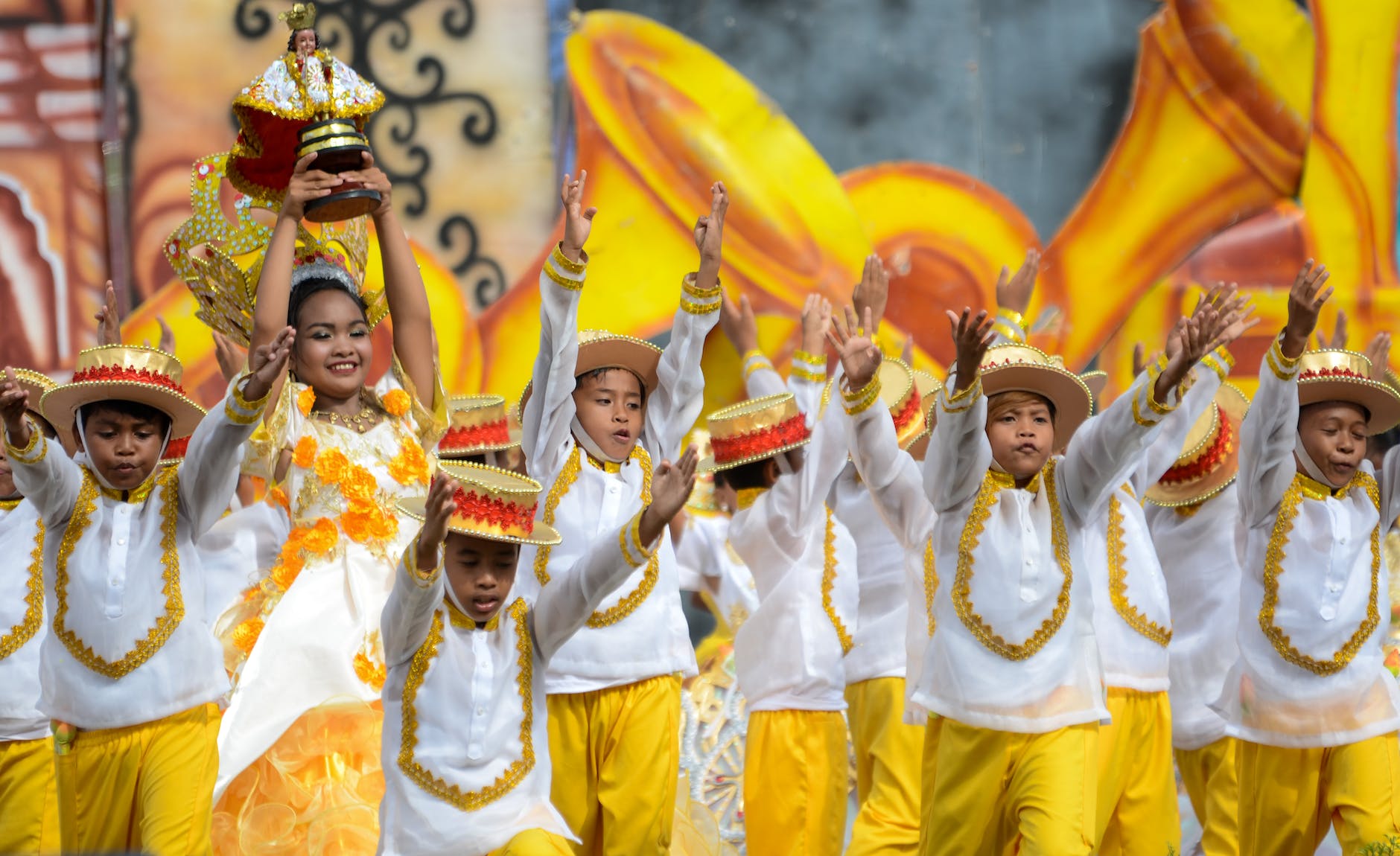
Vibrant Sinulog Festival Celebrations in Cebu City, Central Visayas, Philippines Photo by Jeremiah Odejerte on Pexels.com
Conclusion
Immersing oneself in Filipino culture means encountering an enchanting blend of diverse traditions shaped by history and geography. From exploring vibrant festivals to savoring mouth-watering cuisine and witnessing awe-inspiring religious practices, the Philippines offers travelers a treasure trove of cultural experiences.
While Filipino culture has been influenced by external forces like Spanish and American colonization, it remains resilient and distinct. As a traveler, embracing Filipino culture means going beyond the surface-level tourist attractions and truly engaging with the local traditions.
By learning basic Filipino phrases, understanding non-verbal communication cues, appreciating regional specialties, admiring traditional arts and crafts, and participating in religious festivities, one can gain a deeper understanding of the rich tapestry that is Filipino culture. Visiting the Philippines allows travelers to not only witness but also become part of the cultural fabric that has shaped this beautiful archipelago.
Whether you find yourself wandering through centuries-old churches or dancing along with colorful street processions, your encounter with Filipino culture will undoubtedly leave an indelible mark on your heart. So pack your bags, open your mind to new experiences, and embark on a journey through this captivating land where warm smiles abound and cultural treasures await at every turn.
The Philippines welcomes you with open arms as you set out to explore its vibrant landscapes while immersing yourself in its colorful tapestry of traditions. Let the spirit of adventure guide you as you dive into Filipino culture – an experience that will stay with you long after your journey ends.
A tropical paradise nestled in the heart of Southeast Asia, the Philippines is an enchanting archipelago composed of more than 7,000 islands. Its breathtaking beauty, cultural richness, and warm hospitality have made it a sought-after destination for travelers from around the globe. The Philippines offers a diverse range of experiences for every kind of adventurer – from pristine beaches with turquoise waters to lush mountains and vibrant festivals that celebrate its unique heritage.
A Haven for Nature Enthusiasts
The Philippines boasts an abundance of natural wonders that will leave visitors awe-struck. Picture yourself lounging on powdery white sands while gazing at crystal-clear waters teeming with vibrant marine life – this is just one of the experiences awaiting you in El Nido, a tropical paradise located in Palawan province. Home to stunning limestone cliffs and hidden lagoons, El Nido showcases Mother Nature at its finest.
For those seeking adventure amidst nature’s grandeur, the majestic Mayon Volcano in Albay province beckons. With its perfectly symmetrical cone shape rising dramatically from the surrounding landscape, it offers exhilarating treks for outdoor enthusiasts.
As you ascend to its peak, be prepared to be rewarded with panoramic views that will take your breath away. Among the country’s many hidden gems are the Batad Rice Terraces located in Ifugao province.
These terraces are a testament to human ingenuity as they were carved into rugged mountainsides centuries ago by indigenous communities. The emerald-green terraces create a mesmerizing landscape that seems like something out of a fairytale.
Preserving Cultural Heritage
Beyond its natural splendors lies a rich tapestry of history and culture waiting to be explored. Intramuros, Manila’s historic walled city, offers a glimpse into the country’s colonial past. From the cobbled streets to well-preserved Spanish colonial architecture, Intramuros exudes an old-world charm that transports visitors back in time.
No visit to the Philippines is complete without experiencing one of its vibrant festivals. The Sinulog Festival held in Cebu City is a grand celebration honoring Santo Niño, the child Jesus.
The streets come alive with an explosion of color as dancers parade through the city, moving to rhythmic beats and showcasing their skills in traditional dances. Another captivating cultural tradition can be found among the Kalinga people – the art of tattooing.
Passed down through generations, this ancient practice involves intricate patterns carved into the skin using traditional methods. Beyond mere body decoration, these tattoos tell stories of bravery, heritage, and personal triumphs.
Pristine Wildlife and Marine Biodiversity
The Philippines is also home to a rich tapestry of wildlife and marine biodiversity that never fails to astonish visitors. Within its borders lies Tubbataha Reefs Natural Park – a UNESCO World Heritage Site that boasts some of the best-preserved coral reefs in Southeast Asia.
Snorkeling or diving here will grant you access to a mesmerizing underwater world teeming with vibrant tropical fish, graceful sea turtles, and colorful coral formations. From its azure waters teeming with marine life to its lush rainforests housing rare species such as tarsiers and Philippine eagles, this archipelago is a paradise for nature enthusiasts eager to immerse themselves in awe-inspiring ecosystems.
Exploring the meaning behind “Love the Philippines”
Emphasizing love as a universal emotion that transcends cultural boundaries
Love, a profound emotion shared by people all around the world, is a powerful concept that can be used to connect with individuals on a deep and emotional level. The new tourism slogan, “Love the Philippines,” seeks to tap into this universal sentiment and evoke strong positive emotions in potential visitors.
By emphasizing love as a theme, the slogan transcends cultural boundaries and resonates with people from different backgrounds and nationalities. It serves as an invitation for travelers to experience affectionate connections with the natural beauty and warm-heartedness found in the Philippines.
Highlighting the warmth, hospitality, and friendliness of Filipinos
One of the most remarkable aspects of visiting the Philippines is experiencing firsthand the incredible warmth, hospitality, and friendliness displayed by its people. From rural communities to bustling cities, Filipinos have long been known for their genuine smiles and welcoming nature.
The tourism slogan “Love the Philippines” aims to shine a spotlight on this unique characteristic of Filipino culture. It encapsulates not only their amiable demeanor but also their willingness to go above and beyond in providing exceptional service to visitors.
Immersed in a rich tapestry of diverse cultures and traditions, Filipinos take great pride in ensuring that every guest feels valued and cherished during their stay. From offering warm greetings upon arrival at hotels or resorts to serving mouthwatering Filipino delicacies with heartfelt sincerity at local eateries, Filipinos embody an innate capacity for nurturing connections that leaves lasting impressions on tourists from all corners of the globe.
Beyond mere politeness or customary gestures, Filipino hospitality often extends beyond expectations. Locals are eager to share their knowledge about popular tourist destinations or hidden gems off-the-beaten-path-guiding visitors towards experiences they will treasure forever.
It is this genuine care and eagerness to connect with others that sets Filipino hospitality apart, creating moments of genuine human connection that resonate deeply with travelers. Moreover, the amicable nature of Filipinos is not confined to interactions with tourists alone.
Love and compassion permeate every aspect of Filipino society, fostering a sense of unity and togetherness. From vibrant fiestas where neighbors share laughter and joy, to community initiatives aimed at uplifting those in need, the spirit of love is evident in the collective actions taken by Filipinos to foster a better tomorrow.
In essence, “Love the Philippines” encapsulates the essence of Filipino culture—an invitation not only to explore picturesque landscapes but also an invitation into a nation filled with warm hearts and open arms. By highlighting the hospitality and friendliness embedded within Filipino society, this tourism slogan beautifully captures the unique experience awaiting travelers who choose to embark on a journey through this enchanting archipelago.
Showcasing the Diverse Attractions that Make Visitors Fall in Love with the Philippines
Stunning Natural Landscapes: Beaches, Mountains, Rice Terraces, and Volcanoes
The Philippines is a haven for nature lovers, boasting a myriad of breathtaking natural landscapes. Among these treasures are El Nido’s pristine beaches and crystal-clear waters.
Located in Palawan, El Nido offers an idyllic tropical paradise with its powdery white sands, vibrant coral reefs, and limestone cliffs that seem to defy gravity. It’s no wonder why visitors instantly fall in love with this slice of heaven.
For those seeking a more awe-inspiring experience, the majestic Mayon Volcano in Albay province is an absolute must-see. This perfectly symmetrical stratovolcano proudly stands as one of the world’s most active volcanoes.
Its iconic shape serves as a testament to the raw power and beauty found within nature. Venturing inland to Ifugao province reveals the breathtaking views from Batad Rice Terraces.
These terraces are masterpieces of agricultural ingenuity carved into mountainsides by ancient indigenous communities. The lush greenery combined with the intricate irrigation system showcases not only nature’s splendor but also humanity’s harmonious relationship with it.
Rich Cultural Heritage: Historical Sites, Festivals, and Traditions
The Philippines’ cultural heritage is as diverse as its natural beauty. Delving into historical sites such as Intramuros allows visitors to immerse themselves in Manila’s colonial past.
This historic walled city offers a glimpse into Spanish influence through its well-preserved architecture dating back centuries. For those seeking vibrant celebrations and lively traditions, the Sinulog Festival in Cebu is an extraordinary experience not to be missed.
Held annually in January, this grand celebration honors Santo Niño (the Holy Child) through dance, music, and religious processions. The streets come alive with colorful costumes and joyful revelry, leaving visitors in awe of the deep spiritual devotion and rich cultural heritage.
Another captivating cultural tradition that captivates visitors is the Kalinga Tattoo tradition. This ancient art form has been passed down through generations in the Kalinga province.
The intricate patterns tell stories of bravery, identity, and social standing. Witnessing this sacred practice gives visitors a profound insight into the indigenous cultures that are an integral part of Philippine heritage.
Thriving Wildlife and Marine Biodiversity
The Philippines is teeming with rich biodiversity both on land and underwater. One remarkable example is the Tubbataha Reefs Natural Park, a UNESCO World Heritage Site located in Palawan.
This marine sanctuary boasts vibrant coral reefs, an abundance of marine life, and crystal-clear waters that make it a haven for divers and snorkelers alike. Exploring its depths reveals a mesmerizing world filled with colorful fish, majestic sea turtles, and even elusive whale sharks.
Moreover, the country’s lush forests are home to numerous endemic species such as the Philippine eagle, tarsiers (small primates), and various unique plant species. From exploring tropical rainforests to encountering rare wildlife like Palawan’s mouse deer or Visayan warty pigs, nature enthusiasts have plenty to discover.
Conclusion
As we’ve journeyed through the diverse attractions that make visitors fall in love with the Philippines – from stunning natural landscapes to rich cultural heritage to thriving wildlife – one cannot help but be captivated by its beauty and charm. The Philippines offers a treasure trove of experiences for those seeking adventure, relaxation, or immersion into vibrant cultures. With “Love the Philippines” as its tourism slogan encapsulating all these wonders under one heartfelt phrase, it serves as an invitation for travelers worldwide to embark on their own love affair with this remarkable archipelago.
Let the Philippines’ natural splendor, rich history, and warm hospitality leave an indelible imprint on your soul, making you yearn to return time and time. Come and discover a world where love knows no bounds – the Philippines awaits with open arms.
Introduction The Philippines, an archipelago of 7,641 stunning islands nestled in Southeast Asia, is a haven for travelers seeking diverse landscapes, vibrant cities, and warm hospitality. With its pristine beaches, lush mountains, and rich cultural heritage, the Philippines offers a unique experience that captivates the senses and leaves an indelible mark on those fortunate enough…